Strathspey Monitor Farm
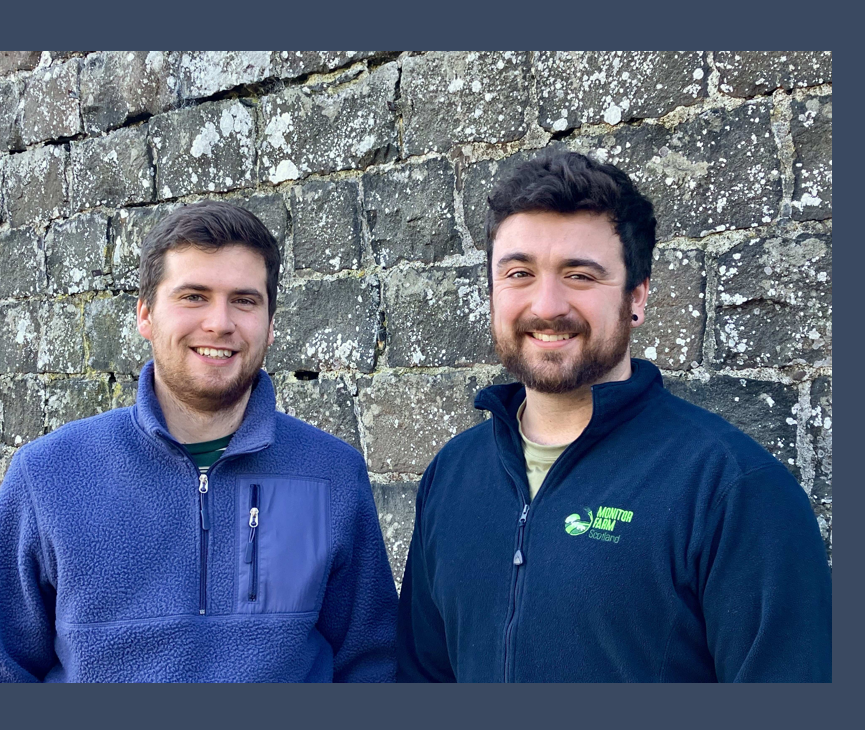
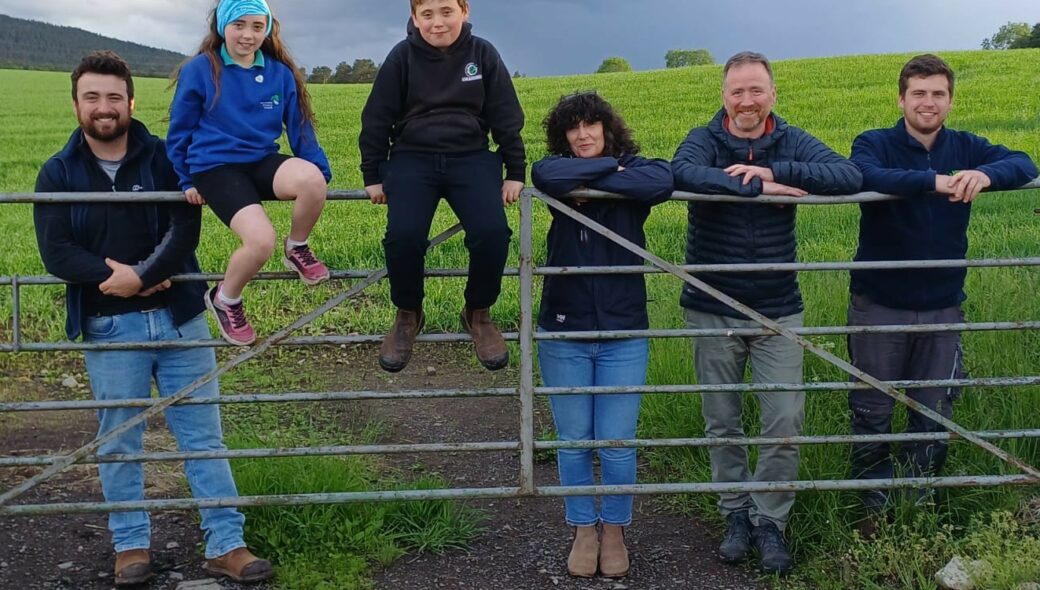
Auchernack is an 323ha (800ac) farm in Strathspey. Today, it is run by Malcolm Smith and his family. Sons Calum and Hamish manage the farm full time and Malcolm works as the Agricultural Adviser at the Cairngorms National Park Authority. Sammie, Malcolm’s wife, is also a partner and runs a successful self-catering business.
The family have farmed here since 1936.
The Smiths have 150 suckler cows and 135 store calves. The focus is on store calf production using predominantly Limousin sires. A Shorthorn bull was used for the first time in 2023. For ease of management, cattle are overwintered indoors. Calving is split, with a third of the herd calving in autumn/winter and the remainder in spring.
Malcolm says, “[As a result of being a Monitor Farm] we are tweaking all the time – we can implement change and see the impact over the lifetime of the project.”
- About the Farm
As the Strathspey Monitor Farmers, the family’s goal is to enhance profitability and explore innovative agricultural approaches. The farm is involved in the AHDB/QMS Environmental Baselining Project to standardize measurements of sustainability.
In 2023, soil analysis revealed the need for more lime.
“It was amazing to see a detailed analysis. I thought I had been pretty good at putting on lime, but we needed more, and we do seem to be getting more out of the grass as a result. If we can get the soil pH right, we will get a better response from everything.”
Digestate application has improved grass growth and along with better fertility has reduced fertiliser use by half.
Technology plays an increasing role in managing this wildlife-rich farm. In addition to regular weighing of cattle, the AHDB/QMS Environmental Baselining Farm Project is introducing remote measuring of land and precise soil monitoring.
The farm is a previous winner of the Cairngorms Nature Farm Award and regularly hosts visits by local schoolchildren through RHET on sustainable farming.

- Malcolm Smith and family
“Now [as a result of being a Monitor Farm] we are tweaking all the time – we can implement change and see the impact over the lifetime of the project,” says Malcolm.
Malcolm values the social aspect of meetings and the insights gained from expert visits, including practical adjustments like repositioning the cattle crush for better cow flow.
The Smiths continue to embrace change, benefiting from external advice and seminars, particularly on succession. Malcolm highlights the importance of staying connected and open to new ideas, ensuring the farm evolves to meet future challenges.
Malcolm is also the Agricultural Adviser for the Cairngorms National Park.

- Livestock
The family aims to breed the ideal suckler cow-fertile, grass-efficient and with a good temperament. Autumn calvers are bred with a Shorthorn bull, while spring calvers use a Limousin bull.
Offspring from the autumn/winter calvers which aren’t destined to be herd replacements are now sold earlier after Monitor Farm visitors questioned why they were kept until March/April.
“We decided to try selling in January and they did well – the new diet also helped them look well. Getting them away earlier saves on silage, bedding costs [the farm has to buy-in a lot of straw] and on time. We are looking at getting them away in the first half of January.”
A specialist nutrition plan has been put in place for the suckler cows, after work showed that too few cows were getting in calf in the first three weeks and there was also a problem with first calvers. Blood testing highlighted a few small issues.
Simon Turner and Karen Stewart, from the College, held a Body Condition Scoring and Nutrition Workshop on the farm in autumn 2024 which helped plan rations for winter and spring calvers.
The Smiths are now managing first calvers and thinner cows separately from the main groups, feeding them more to maintain condition.
The farm’s livestock housing has also benefited from external expertise, with Malcolm now removing some of the slatted boards from the side of buildings in order to improve ventilation. He points out that when farmers put up sheds, they’re usually multi-purpose, but good ventilation, including a big, open ridge, is essential for livestock to avoid disease.
A ‘horrible’ outbreak of pneumonia last year highlighted the cost of the disease. While many people would focus on the vet cost, this was actually a small part of it; keeping track of the additional costs and time resulted in a total cost of £8,000, of which vet costs were £1,200. “We’ve been open about the costs and losses as it is scary. If you’re feeding for dlwg of 1.2kg and getting 0.1kg, which we were, it soon adds up. Vaccinating would have cost us £700 and we made it a priority this year.”
The Smiths are trialling virtual fencing cattle collars, initially on their breeding heifers, using the movable, fence-free technology to encourage good grazing practice on their under-grazed species-rich moorland.
“A visit from SAC animal behaviour specialist Simon Turner was a game changer when he asked why we didn’t turn our cattle crush round as it would be better for cow flow – we did, and it is”

- The business
“Our business will definitely be different by the end of these four years,” says Malcolm. While he is someone who says he likes trying new things and wanted to look more into the business side of his farm, he believes the real value in becoming a Monitor Farm was that the business was typical of many farms. “We are ordinary.”
Like many, profitability was a key concern. “No matter how good a price we got for selling our store cattle, the money was just gone. I never felt like we were getting ahead even if we were doing a decent job. The returns weren’t good enough.”
The Monitor Farm’s management group has been particularly close and open with one another, he says. “We have all done benchmarking and have waived our anonymity, which has been really refreshing.
“The community and social side of the Monitor Farm has huge value. Farming can be lonely these days and going to meetings and talking to people is really good for mental health. It’s been good to see folk out on farm and enjoying the craic.”
The family has also benefitted from attending other seminars and meetings, particularly on succession, says Malcolm. “It is too easy to stay at home and be isolated. I really like people asking ‘Why are you doing that?’.
- Key Highlights
-Specialist nutrition plan to boost cow performance
-Farm buildings adapted to improve livestock health
-Management group benchmarking and openness
-Cattle Body Condition Scoring and Nutrition Worshop
-Becoming an AHDB/QMS Environmental Benchmarking farm

- Final Year of Programme Plans
The Smith family are in the middle of a succession transition, with father, Malcolm, now working full-time off the farm and his sons Calum and Hamish full-time on the farm. Next year will see this progress further, with both sons growing their involvement and their contracting business.
The brothers have opted to use a Shorthorn bull on their cows in a change from a Limousin, and have recently bought a second Shorthorn, believing a native breed will suit their system better. Calum says: “We will be pushing forward with the Shorthorns in 2026.”
Being part of the Monitor Farm virtual fencing trial has been a highlight at Auchernack, bringing production and environmental benefits. The family are looking forward to seeing how they can adapt its use and what they can achieve with it in 2026 having had a year’s experience. “This year the grazing set up was a massive boost.”
Meeting Reports
-
 REPORT: Trusting the Process at the Summer 26 Open Meet
Auchernack, in the heart of the Cairngorms enters its fourth and final year as the Strathspey Monitor Farm. The meeting theme, 'Trusting the Process' highlights the importance of long-term planning and commitment in four important areas; • bull choice • use of long-term data and information • greening requirements of Highland livestock farms • planning for the next generation.
download -
 EFA Changes 2026 - Jenny McCallum
Jenny McCallum's thinking on the Strathspey Monitor Farm's eleven EFA options
download -
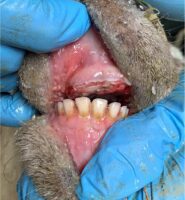 REPORT: Bluetongue and EFA at the Winter 25 Open Meet
Auchernack Farm, in the heart of the Cairngorms has been in the spotlight as the Strathspey Monitor Farm for the last three years. The Farm’s Management Group, a collection of farmers and other professionals, proposed a winter discussion on Bluetongue and Ecological Focus Areas, two topics likely to top conversations across the Highlands in 2026
download -
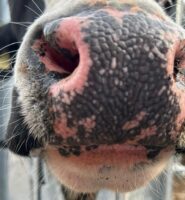 Bluetongue - the Vet's perspective
Antonia Brulisauer, Animal and Plant Health Agency (APHA) vet discussed the spread, control, potential management and symptoms of Bluetongue in sheep and cattle at the Strathspey Monitor Farm winter meeting.
download -
 Guidance on Vaccinations from ScotEID
Navigating the ScotEID Vaccinations home page by Abbie Robertson.
download -
 Pneumonia and Lungworm-A Strathspey Monitor Farm Vet Special.
Pneumonia in winter livestock is painful, both emotionally and financially. This report based on the Monitor Farm experience by explaining the various forms of pneumonia, discussing vet testing and encouraging preventative management.
download -
 Autumn Preparations for Livestock- Sept 24 Meeting Report
Malcolm and Calum Smith continue to improve their herd with advice on Nutrition, Body Condition Scoring, Ventilation and Grazing
download -
 Farm Technology in the Highlands - Summer 25 Open Meet
Farm technology has the potential to improve productivity, profitability and sustainability of this and other Highland farms. Three technologies were on display at the July Open meet, covering grassland management, dock control and virtual fencing.
download -
 Summer 24 Meeting Report
‘It’s clear any future farming support package will be linked to environmental enhancement and sustainability. It is vitally important for us to look at how we can still farm profitably, whilst doing it in harmony with nature.’ Featuring: Digestate MyHerdStats Biodiversity App Selecting breeding animals
download -
 Nutrition Planning report - June 2024
Malcolm and Calum Smith wish to fine tune the cattle rationing to maximise the performance of the suckler cows and the growing stock, while making best use of home-grown feed and forages. T The project included, • Feed budgeting • Ration planning • Data collection • Evaluating animal health and bloods pre calving
download -
 How to record Bluetongue vaccinations on ScotEID
Recording both sheep and cattle vaccinations is compulsory. In this presentation, Abbie Robertson, ScotEID guides the first time user through the steps.
download -
 Ventilation Report February 2024
The Smiths are aware of the expertise in livestock ventilation of Jamie Robertson, LMS design, and invited him to Congash Farm to assess the steading and make recommendations with the help of the Monitor Farm Management Group.
download -
 Nutrition Planning Report Autumn 2023
In Summer 2023, Karen Stewart, SAC Ruminant Nutritionist compiled a Specialist Advice Report on nutrition for Malcolm Smith’s autumn and spring calving herds and on calf growth rates. The suggestion is that improvements in nutritional management could help enhance the farm’s overall cattle herd performance.
download -

-

Presentation
No presentation.




- How does Virtual Fencing Work?
- Can Virtual Fencing Help Shape the Future of Scottish Livestock Farming?
- Argyllshire Monitor Farm - Demonstration and Discussion on the Use of Agricultural Drones