Free online event invites suckler producers to explore data-driven decision making
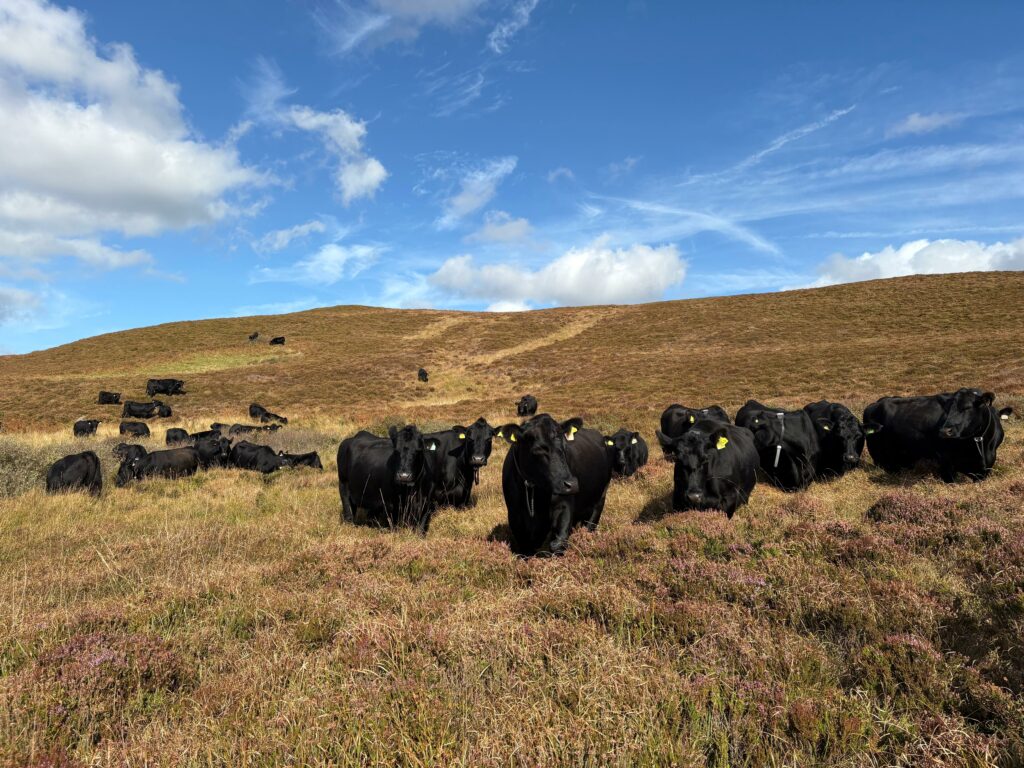
Suckler producers from across the industry are being encouraged to join a free online webinar exploring what makes a truly profitable suckler cow, using practical findings from a Monitor Farm Scotland suckler cow project on Islay.
Taking place on Monday 2 February 2026, from 7.00–8.30pm, the webinar will focus on how improved nutritional management and data-driven decision making can improve herd performance while reducing costs of production.
The project, carried out at Craigens Farm, Islay, has led to the development of a Profitable Suckler Cow Calculator – a free, innovative tool designed to help producers calculate calf margin over costs and overall suckler efficiency. The calculator also includes a ration check for suckler cattle, enabling winter feeding costs to be assessed and factored into management decisions.
Christine Cuthbertson, Monitor Farm Regional Adviser said: “The Suckler Cow Project has shown just how valuable it is to combine good stockmanship with clear, reliable data. This webinar is about giving suckler producers practical tools they can use on their own farms to better understand costs, improve efficiency and make confident decisions about their herds.”
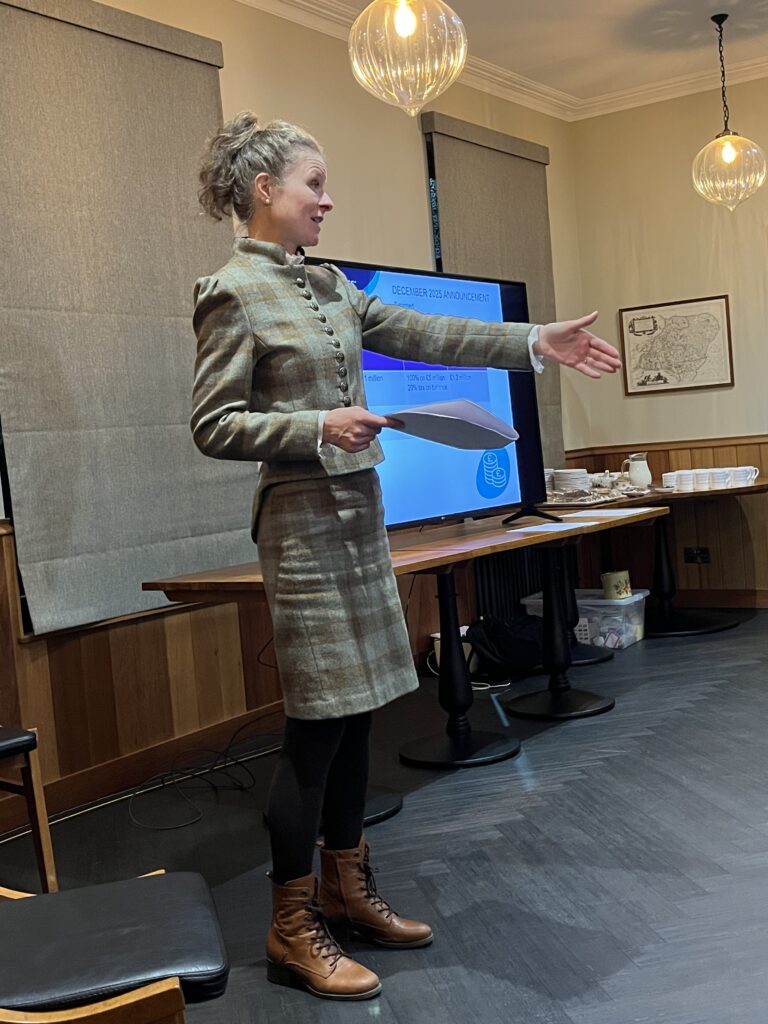
The webinar will be led by Lorna Shaw, Ruminant Nutritionist with SAC Consulting, who will guide attendees through the Profitable Suckler Cow Calculator. She will demonstrate how the tool can be used alongside physical traits for heifer selection and culling decisions, bringing financial data into the decision-making process.
Lorna Shaw said: “Feed is one of the biggest costs in a suckler system, yet it’s often not fully quantified when decisions are being made. The Profitable Suckler Cow Calculator allows producers to look at cow performance alongside real feeding costs, helping identify which cows are genuinely working for the business.”
Attendees will also hear from Craig Archibald, Monitor Farmer at Craigens Farm, who will share how the project has influenced cow selection decisions and supported the future growth and development of the farm’s suckler herd on Islay.
The event is open to all farmers and will be delivered online via Zoom.
Event details:
- Date: Monday 2 February 2026
- Time: 19:00–20:30 BST
- Venue: Online
- Theme: Who Is Your Profitable Suckler Cow?
Registration:
Meeting Registration – Zoom
Using forage crops and growth targets to drive value in your beef and sheep system will be key topics for discussion at the upcoming Stirlingshire Monitor Farm meeting, now open for booking.
The meeting, on Tuesday 27 January at the Duncan family’s Lands of Drumhead Farm, Balfron Station, will pose the question ‘What are you feeding for?’
The Duncans have introduced forage crops and set target growth rates for housed growing cattle. Making good feed and forage decisions which fit your system can help control costs and ensure stock hit target markets. The meeting will be a practical, hands-on session delving into confidently making those forage crops and stock feeding decisions.
Starting at 10.30am, the morning will start in the field, focussing on calculating the value of forage crops and using the Duncan’s crops as an example. The family are in their second year of growing fodder crops with advice from the Borders-based farmer and grazing specialist Graham Lofthouse, Andrew Best from Watson Seeds and the Monitor Farm management group.
Rebecca Duncan has led the charge with feed calculations, and visitors will see how the flock are using the strip grazed turnip and kale mix. The session will include measuring the crop, discussing feed allocation, infrastructure, and management.
After lunch at The Winnock Hotel, Drymen and an update from the Duncans on projects and progress on the Monitor Farm, the afternoon will see consultant Emily Grant from Forrit Consultancy discuss cattle target growth rates. Working with Duncans, Emily and attendees will discuss why they want to set a target growth rate, their goals and how to manage that growth for success, along with managing risks.
Monitor Farm regional adviser Christine Cuthbertson says: “This will be a very practical meeting, from being in the fields looking at forage crops in the morning, to discussing how to drive value from those crops in beef and sheep enterprises. I look forward to welcoming everyone along and hearing from the Duncans, Graham, Andrew and Emily.”
Booking is essential for catering purposes, and car parking is very limited so please car share if possible. Please wear suitable outdoor clothing and sturdy/waterproof footwear and clean vehicles, footwear and clothing before attending for biosecurity. Sorry, no children under 16 or dogs allowed.
- What are you feeding for? – Stirlingshire Monitor Farm open meeting on Tuesday 27 January, 10:30-14:00 at Lands of Drumhead Farm, Balfron Station G63 0NH. Lunch included. Book here: https://Stirling.eventbrite.co.uk
Farmers can now access in-depth advice on the options, costs and outcomes of forage crops and outwintering following the completion of a new Monitor Farm Scotland Innovation Project, ‘Maximising the Potential of Forage Crops’.
The project concluded with a Deeside Monitor Farm meeting, alongside advice based on in-depth research into 10 forage crops grown on four farms in north-east Scotland last autumn and winter. The project was commissioned from SAC Consulting and delivered by beef and sheep consultant Kirsten Williams.

Forage crops studied include brassicas, deferred grazing and forage beet, with results including detailed costs of production, nutritional analysis and an insight into the animals’ requirements. A presentation introduces the farmers, explains the main features of the project and discusses crop choices, costs and convenience.
Four papers with practical advice have been created which are free to access at monitorfarms.co.uk
- Choice of crop
- Establishment
- Weather resilience
- Utilisation and nutrition
The online hub includes a case study featuring Duncan Morrison, the Deeside Monitor Farmer, who was one of the four farmers involved. The other three are Jonny Stewart from Mains of Balfour/Rashenlochy near Banchory, Robert Marshall from Kincraigie Farms, Lumphanan, and Alex Stephen, Arnhall Farm by Edzell.
Kirsten Williams said: “Choosing an outwintering system for your farm requires an understanding of your farm assets, how the crop system fits with your farming practices and how it would be grazed.
“The project highlighted great variation between outwintering systems. High yielding crops such as fodder beet and kale carried high numbers of stock/ha at 16.88 livestock units (LU)/ha and 12.75 LU/ha, respectively, while lower yielding crops such as a catch crop of stubble turnips and deferred grazing carried only 2.40 LU/ha.”
The report was summarised at a well-attended Deeside Monitor Farm meeting recently. Peter Beattie, Monitor Farm regional adviser, says: “There was a large number of attendees who don’t currently use forage crops for outwintering. The diversity of systems in the report shows the possibilities and it was great to see so many people talking about the options.”
- Find the practical papers from the report, plus Deeside Monitor Farm case study here: https://www.monitorfarms.co.uk/maximising-the-potential-of-forage-crops/
It seems like no time since the current Monitor Farm Scotland programme launched at AgriScot in November 2022. Since then, the nine Monitor Farm businesses have been involved in many projects, trials and on-farm meetings, all aimed at improving the productivity, profitability, and sustainability of their businesses.

With the programme being ‘farmer-led, farmer-driven’, each farm’s management group and meeting attendees have been able to suggest and steer meeting topics, as well as encouraging each Monitor Farm to try new and different approaches.
It’s the first Monitor Farm programme to run over four years, with the extra year allowing more time for developing and testing ideas and assessing practical outcomes. So what have the nine Monitor Farmers got planned for 2026, their fourth and final year?

Argyllshire – Craig Archibald, Craigens Farm, Islay; sucklers, store production, ewes and finishing lambs, plus spring barley for local distillery.
Being involved in the virtual fencing project has been a great benefit over summer, but lack of connectivity in autumn meant the 20 trial cows are now housed rather than outwintering. However, with ongoing work to solve technical issues, the second year of virtual fencing will see cows calve outside on extensive sand dunes – something now possible because Craig can create ‘virtual fields’ and find cows who have gone off to calve.
Investigations to find the best suckler cow for the farm will continue. With plenty of data, Craig will also be selecting those who have the traits to do well in virtual fencing to expand the project.
The new Mule flock – a Monitor Farm-driven change – will be assessed for performance, hoping for better productivity, growth and early finishing.
Soil health will also come into focus next year, especially compaction caused by geese, while the benefits of adopting rotational grazing will also become clearer.

Banff and Buchan – Bruce Irvine, Sauchentree, Fraserburgh; suckler cows and breeding ewes, taking progeny through to finishing, arable, plus new hen unit.
Next year is a big one for the Irvine family: “It will be 250 years of our family farming at Sauchentree – my daughters are the tenth generation.”
Monitor Farm-wise, he will be looking at better use of grass, splitting fields to further develop paddock grazing. “We also need to find a better risk management approach for forage crops, as I planted 30 acres of swedes this year and nothing grew.” Being near the coast, the farm is on shallow, sandy soils which are drought-prone.
Deciding on EID systems for cattle is another focus. Bruce is currently involved in trialling electronic boluses in his sucklers, hoping they could highlight events such as calving to help reduce workload.
Changing from organic to conventional two years ago, he wants to improve arable profitability which has dropped since conversion. Another focus is best use of muck from the 32,000 laying hens now on-farm.

Deeside – Duncan and Claire Morrison, Meikle Maldron, Banchory; commercial and pedigree sucklers, offspring sold as store, finished or breeding stock, plus sheep.
Duncan and Claire expanded their farm business this year, obtaining a tenancy on a neighbouring 160-acre farm. Happy with their technical performance and the system they have in place, this year has seen the Monitor Farm and management group concentrate on learning more about business aspects.
This has included sessions on using accounting package Xero on farm, hearing from a banker about what they look for in a business seeking a loan, and financial planning for the future. “They’ve been really interactive sessions with the whole management group, and for next year, I’m asking that group what they would like to do.”
Duncan says one of the things he enjoys most with Monitor Farms is being able to visit other businesses and to discuss what they are doing. “You can hear about what people are doing, but never really grasp it until you see it with your own eyes – it gets you thinking.”

Dumfriesshire – Richard McCornick, Barnbackle, Dumfries; commercial and pedigree sucklers, selling as stores and for breeding, breeding ewes with lambs sold off grass.
Last year’s work using EBVs for selecting a new bull for breeding replacements will see his first crop of calves arrive at Barnbackle, while Richard also plans to start using sexed semen to breed replacements from his best performing commercial cows. As part of this, all his cattle now carry TruTest electronic tags which highlight heats and other health traits.
The sheep have been split into A and B flocks, depending upon performance, and Richard will also start to see the results of not breeding from his ewe lambs but waiting a year longer. “I think we will see them produce more, bigger lambs than if they were bred as ewe lambs. They should also get back in lamb more easily.”
The rotational grazing project at Barnbackle will progress further, and he’s looking at different establishment methods for kale and swede winter forage crops, with discing and using the fertiliser spreader looking successful.

East Lothian – Stuart McNicol, Castleton, North Berwick; arable, with cover crops grazed by sheep over winter plus agri-tourism businesses.
Stuart had a very successful harvest, with all crops yielding well. His spring barley made malting grade, but with poor prices, the area grown will be reduced in 2026. Instead, he will rent the land to a local grower for growing sprouts and cabbage.
He has been trialling cover crops for the last couple of years, but the dry summer and autumn has impacted growth this year. However, the three mixes – one farm saved and the other two being commercially available grazing mixes – are currently being grazed by Hebridean sheep.
With a brome issue, he has been doing more ploughing in addition to chemical control. This is a change to his usual min-till approach, but essential for weed control.
“I’d set out on the Monitor Farm programme to tackle net zero, but we haven’t done that – and neither has anyone else. We’ve also been trying to reduce costs, but that is hard on this size of farm.”

Roxburghshire – Robert Wilson, Cowbog, Kelso; purebred sucklers with offspring sold for breeding or finished, sheep and arable.
There has been lots of change at Cowbog, not least the end of a tenancy which has now become a contract farming agreement, with a proportion of the arable land converting to temporary grass leading to an overall reduction in arable in the business, allowing Robert to run cattle more extensively.
Calving period has been tightened, increasing the spring herd and stopping the autumn calvers. Doing this while trying not to lose production has been ‘slightly like turning round an oil tanker,’ he says.
Cow numbers are growing, and with a feeling that they only needed a maximum of 100 pure Hereford calves, an Aberdeen Angus bull is now being used on 20% of cows; the farm’s first ‘Black Baldie’ calves are due in spring. “That change of sire comes with an opportunity to reevaluate our marketing of stock,” says Robert.
With the increase in cow numbers, he will be looking at what’s best – increasing numbers or maintaining some extensiveness, while escalating winter silage costs will be scrutinised.

South Ayrshire – John and David Andrew, Rowanston, Maybole; sucklers, with progeny and bought-in stores finished, breeding ewes and arable.
A project looking at finishing cattle performance and costs will be a big focus for 2026 for the Andrews. It is following home-bred and bought-in stores who will finish from February onwards. “It will be interesting to see how the different batches and breeds compare,” says David.
They are also going to be trialling finishing bull beef; autumn-born terminal-sired calves will be finished indoors over summer, taking pressure off summer grazing.
They are one of the four farms involved in the virtual fencing project and are keen to see how much more they can achieve with it in 2026. “It would be a thought to go back to not having it now,” he adds.
Having fully set up their rotational grazing system, they plan to make more of it next year, having ‘learned from their mistakes’.
“Overall, we are making tweaks and changes, trying to get the most out of every enterprise,” says David.

Stirlingshire – the Duncan family, Lands of Drumhead and Blairfad; breeding sheep, with stratified system on hill and lowland, plus suckler cows, selling stores.
Grass productivity is a key focus for the Duncans, with a liming and reseeding programme started since becoming a Monitor Farm; they were unaware soil pH levels across the farm were so low. Next year will see more livestock performance results analysed; the family says better grass quality meant they sold more lambs fat this year.
They have also changed sheep breeds, with a new Cheviot flock which they have enjoyed working with and plan to expand.
Their sucklers have been part of the virtual fencing trial, but connectivity issues have meant it has been of limited use this year. With this issue almost solved, they hope to make progress in 2026.
A new cattle handling system – suggested by Monitor Farm visitors – has made weighing much easier, with plenty of data now to assess. They are planning to use the data, alongside much more enterprise-specific costings, to focus on productivity and profitability of each enterprise.

Strathspey – the Smith family, Auchernack, Grantown-on-Spey; commercial suckler cows, selling progeny as stores.
The Smith family are in the middle of a succession transition, with father, Malcolm, now working full-time off the farm and his sons Calum and Hamish full-time on the farm. Next year will see this progress further, with both sons growing their involvement and their contracting business.
The brothers have opted to use a Shorthorn bull on their cows in a change from a Limousin, and have recently bought a second Shorthorn, believing a native breed will suit their system better. Calum says: “We will be pushing forward with the Shorthorns in 2026.”
Being part of the Monitor Farm virtual fencing trial has been a highlight at Auchernack, bringing production and environmental benefits. The family are looking forward to seeing how they can adapt its use and what they can achieve with it in 2026 having had a year’s experience. “This year the grazing set up was a massive boost.”
More on Monitor Farm Scotland
Find out more about each of the Monitor Farms, read meeting reports and see trial results and project updates, as well as finding information about previous Monitor Farm programmes at https://www.monitorfarms.co.uk/. The website also hosts details of upcoming meetings and how to book your space.

Booking is open for the upcoming East Lothian Monitor Farm meeting discussing soil health, organic matter and the outlook for arable crops.
Running from 10am-3pm on Monday 19 January at Stenton Village Hall near Dunbar, the morning will focus on cover crops and green manures in a session termed ‘Grow it’. After lunch supplied by DRIFT, the East Lothian Monitor Farm’s cafe, the afternoon will focus on ‘Spread it’, discussing the availability and suitability of organic manures in the local area.
Stevie Gray from Scottish Agronomy will tackle the ‘Grow it’ session, discussing the risks and rewards of growing cover crops and green manures. This will include species selection, establishment, and termination of cover crops and green manures, as well as a practical species identification session.
The afternoon – ‘Spread it’ – will look at the range of organic manures available in East Lothian including mushroom compost, layer manure, thermally hydrolysed biosolids, food waste digestates, farm-based digestates and cattle manure. Within this session, Greg Dawson from Scottish Agronomy will look at nutrient management planning and valuing imported organic manures. He will also discuss key phytosanitary issues in rotations that include vegetables and potatoes.
Adrian James, AHDB’s knowledge exchange manager for cereals and oilseeds, will round off the meeting, discussing the outlook for 2026.
Iona Smith, regional adviser says: “It will be great to start the new year with a practical look at these key topics, specifically tailored for East Lothian. This meeting is open to all growers, and I look forward to welcoming everyone to discuss the issues with Stevie, Greg and Adrian.”
With lunch provided, booking is essential for catering purposes.
- Grow it or spread it? – East Lothian Monitor Farm open meeting on Monday 19 January 2026 from 10:00–15:00 at Stenton Village Hall, Dunbar, EH42 1TE. Lunch included. Book here: https://GrowItOrSpreadIt.eventbrite.co.uk
Kirsten Williams, SAC Consulting, presented the findings of her 2024/25 forage crop work across four Aberdeenshire farms, at the recent Deeside Monitor Farm Open Meet, ‘Forage for Thought’. Kirsten studied ten systems on the farm, covering brassicas, deferred grazing and forage beet.
The presentation, found here, introduces the farmers, explains the main features of the project and discusses crop choices, covering costs and convenience.
Kirsten has created four papers covering Choice of Crop, Establishment, Weather Resilience and Utilisation & Nutrition. There is also a Case Study, featuring Duncan Morrison, the Deeside Monitor Farmer.
You can find these below the presentation report.
FAS TV returned to the Strathspey Monitor Farm in October 2025 to find out how the Smith Family have got on with trialling virtual fence technology with their bulling heifers on a species-rich hill that requires targeted grazing for biodiversity.
In this video, Hamish Smith explains how he uses the virtual fencing to manage his stock on a 200ha upland area which had been ungrazed for several years.
Peter Beattie, Monitor Farm’s North Regional Adviser talks about the Monitor Farms and the way they use virtual fencing to enable farmers to optimise pasture use.
NatureScot’s Anne Elliott discusses how important the use of the virtual fence technology has been in managing the species-rich hill at Auchernack, as she describes some of the many plant species which are benefiting from cattle grazing the hill while enhancing sustainability on-farm.
Strathspey Monitor Farm Winter 25 Meeting Report
Auchernack Farm, in the heart of the Cairngorms has been in the spotlight as the Strathspey Monitor Farm for the last three years. The Farm’s Management Group, a collection of farmers and other professionals, proposed a winter discussion on Bluetongue and Ecological Focus Areas, two topics likely to top conversations across the Highlands in 2026.
Here is the report of the meeting with links to the presentations and key online webpages.
Monitor Farm Scotland has launched a new Management Accounting Guide, aiming to help farmers take more control over making timely financial decisions. The workbook helps turn profit and loss accounts into a decision-making tool, giving greater insight into financial performance and identifying successes and potential problems at an earlier stage.
The user-friendly guide, which is available in print and online, has been written by farm business consultancy Laurence Gould. It is designed to approach the task in a step-by-step process using data which is already available on-farm.
Grace Reid, Programme Manager for Monitor Farm Scotland said: “Our aim throughout our current four-year programme and beyond is to improve the productivity, profitability, and sustainability of Scottish farming businesses. Being able to make the right financial decisions is a crucial part of that, and it’s something that our Monitor Farms, management groups and meeting attendees have discussed at length.
“With our focus on being ‘Farmer Led, Farmer Driven’, this Management Accounting Guide is designed as a useful, practical workbook, helping to convert profit and loss accounts into a decision making tool. It’s not about adding more paperwork and office time to already busy businesses, but about getting much more from the figures and data farmers already have.”
Guide co-author Ian Thompson, Dunfermline-based associate director of Laurence Gould, said: “We were delighted to work with Monitor Farm Scotland to produce the Management Accounting Guide as it’s an opportunity to help a wide range of farmers benchmark their businesses from their own farm accounts.
“We see daily the benefits that arise from farmers benchmarking and gaining the confidence to make positive changes that make their businesses more resilient and fit for the future.”
Callum Turnbull, Melrose based Laurence Gould consultant and guide co-author added: “By working through their own figures alongside the guide, farmers can quickly identify where their business is performing well, where costs are out of line, and where meaningful improvements can be made.
“Farmers are encouraged to use the guide in short, focused sessions, compare results with previous years and industry benchmarks, and revisit the process regularly. The aim isn’t perfection – it’s to give farmers clearer insight, stronger decision-making, and greater confidence in planning for the future.”
Monitor Farm Scotland will be launching a series of videos and workshops in spring 2026 to enable farmers to work through their accounts and the Management Accounting Guide template, with meeting dates and formats to be confirmed.
This November, Monitor Farm Scotland held impactful impactful sessions in Elgin (3rd Nov) and Edinburgh (7th Nov) whereby farming families came together to tackle some of the toughest conversations in agriculture—succession planning, management transition, and family communication.
Led by Lydia Carpenter, with remote insights from Elaine Froese, these workshops created a safe space for open dialogue and practical strategies to strengthen farm businesses for the future.
Why These Conversations Matter
These conversations are not always easy—but they are necessary. Succession isn’t just about legal documents—it’s about relationships, clarity, and planning ahead. Avoiding these discussions can lead to stress, conflict, and uncertainty. Participants willingness to show up, speak up, and lean into the tough topics is what makes the Monitor Farm Scotland programme truly farmer led and farmer driven.
Top Takeaways from the Events
- Start Early: Succession planning works best when it’s proactive, not reactive.
- Communicate Clearly: Use structured family meetings to reduce tension.
- Protect Business Continuity: Planning ahead safeguards both the farm and family relationships.
What Participants Said
“Future planning is essential regardless of how difficult it may be and it is so comforting to know there are resources out there to help.”
“Mindset is very important – we now have a plan for our next family meeting and will be able to move things forward based on what we learnt today.”
Resources & Next Steps
- Download the slides from the events → See below
- Listen to the Monitor Farm podcast: Field Talk for an introduction to the topic and a live round up from the events:
- 1. Discuss the Undiscussabull Comes to Scotland
- 2. Coaching for Clarity – Making a Positive Difference
- 3. Mediation Matters – Finding common ground in farming families
- 4. Tackling transition successfully – how it can be done
- 5. Discuss the Undiscussabull – The power of talking it through
- Watch Lydia Carpenter’s recap video → Monitor Farm Scotland YouTube Channel
- Access a copy of the Discuss the Undiscussabull Succession Planning Guide → contact greid@qmscotland.co.uk
Thank You
A huge thank you to our speakers, Lydia Carpenter and Elaine Froese, for sharing their expertise and compassion. And to RSABI, Farmstrong Scotland, and Gordon Davies your support has been invaluable and reminds us that help is always available.
Let’s keep the conversation going – at home, on the farm, and in our communities.