South Ayrshire Monitor Farm
A total of 716ha (1,770ac) are farmed by John and Allison Andrew in partnership with son David. Rowanston comprises 129ha (320ac) of owned land, with an additional 40ha (100ac) of neighbouring land rented annually. The 546ha (1,350ac) hill farm of Blair lies three miles away and is rented on an MLDT from Kilkerran Estate.
Livestock consists of 150 hill suckler cows with replacements homebred and all progeny finished on farm. About 200 store cattle are bought-in for finishing each year. There are 1,000 breeding ewes in total with 550 hill ewes and 450 lowground.
About 40ha (100ac) of feed crops are grown comprising winter and spring barley, spring oats, wholecrop spring wheat, swedes and fodder beet. Silage chopping, combining, drilling, spraying, hedge cutting and umbilical slurry spreading are carried out by contractor. All other operations are done by the Andrew family and their one full time employee.
- About the Farm
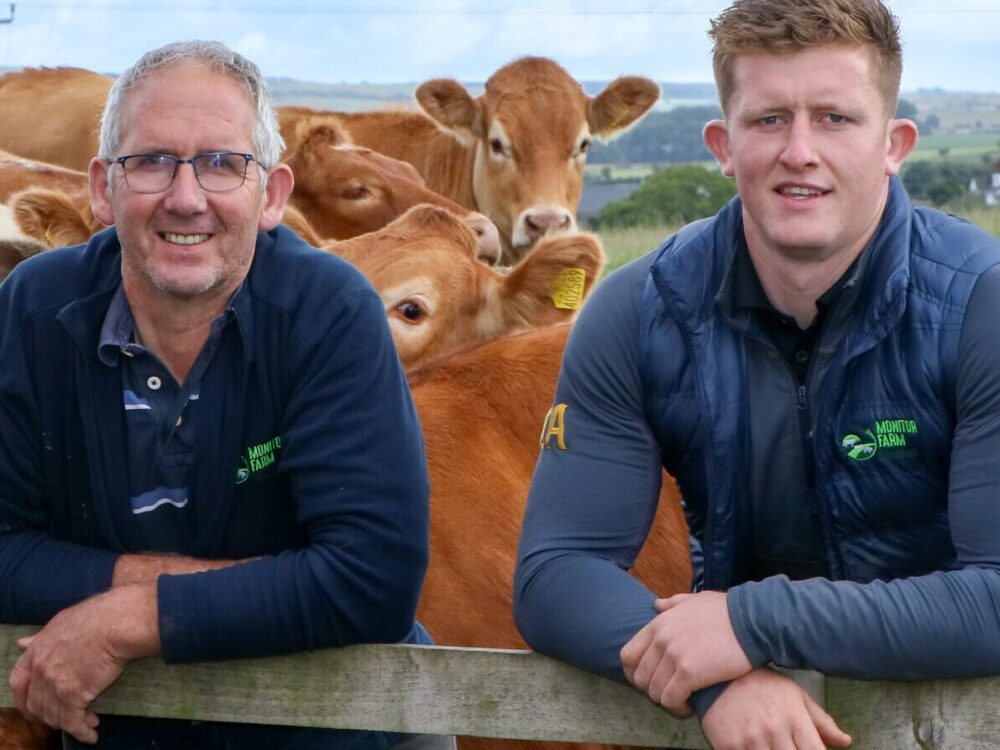
For South Ayrshire Monitor Farmers John and David Andrew, the first phase of the project – data gathering and discussion – is over, and now the business is starting to put the ideas and plans into action.
David says: “Initially, we had an Integrated Land Management Plan done by SAC, and as result of that, we identified two areas – our suckler cows and soil health – where we have had follow-up specialist plans done.”
The suckler cow plan identified two main issues – improving calving percentage and the opportunity to extend the grazing system – both of which will help improve returns.
“We knew we wanted to increase the calving percentage, and the Monitor Farm project has allowed us to access ideas from the management group and consultants. Now, we are starting to change our breed policy and have recently bought 12 pedigree Luing heifers.”
David explains that one of the main issues with the current herd is that the mixed breeds the farm runs weren’t well suited to the hill ground. He believes the Luing’s hardiness and fertility will help, and it is a breed which will work well with extended grazing. The farm already runs a Luing bull so has some experience of the breed, and he is also aiming for more uniform finished progeny.
“We are 50/50 spring and backend calving, and we want all our spring calvers to be Luings, with the backend Sim-Luing cows. The new heifers will speed the process, and we aim to calve them at two years old, rather than our current 30 months. They are strong and well grown, so they were fit to go to the bull.
“Our heifer management was also highlighted as an issue as we sometimes struggled to get first calvers back in calf, which we think was mainly to do with nutrition. Once the Luings have calved, they will go outside onto good deferred grass which will help. They will also be able graze the hill for longer in autumn before housing.”
At Rowanston, the lowland grazing and silage ground is set to receive lime after initial soil mapping and testing identified pH as an issue. The Andrews have been reducing fertiliser use, and this is set to fall further still after correcting the pH and slurry analysis, says David. “Anecdotally, we thought the slurry from the fattening shed was good, and analysis showed it was better than we thought. Having that knowledge gives us more confidence to use less fertiliser.”
The farm has also been trialling min-till on its arable ground alongside ploughing. It’s produced some mixed results so far, and while last year’s min till crops looked less good, there was little yield difference at harvest. “The poor summer meant yields were disappointing for both, so perhaps it’s not the best year for comparison, but there was a saving in fuel, labour and time by not ploughing.”
Last autumn saw a focus on fertility and feet in the farm’s sheep flock in an effort to improve the scanning percentage. Ewes have been blood sampled, with low selenium, cobalt and iodine identified as issues; now a trial on the hill ewe lambs is looking at the impact of a bolus, a bolus plus Liquithrive drench, and just Liquithrive. Regular weighing plus scanning and lambing results will help identify the best approach, he says.
Tackling lameness will be a key project in the lowland flock, which was vaccinated with Footvax in autumn for the first time. “Vaccinating will help us clear the problem and get a good base. Going forward, we will need to have a culling policy if we continue to have issues as it may be a genetic problem.”
While there is already lots happening, David is keen to explore other opportunities, especially no virtual fence cow collars, and they will be one of the Monitor Farms trialling them. “There is a significant financial cost, but they would be good for our hill. We calve out there and we can easily spend half a day looking for a cow who has taken herself off somewhere to calve. The collars will be really helpful for this, and they will also allow us to move cows to specific areas where we can improve the grazing for sheep.”
As well as the technical benefits, he says the social aspect of being involved in the Monitor Farm programme has been very positive, especially in such a challenging year. “The meetings and WhatApp groups have really helped, as we are all speaking and being open and honest about our problems – it has made a difference to me.”

- David Andrew
“The meetings and WhatApp groups have really helped, as we are all speaking and being open and honest about our problems – it has made a difference to me.”
- Final Year of Programme Plans
A project looking at finishing cattle performance and costs will be a big focus for 2026 for the Andrews. It is following home-bred and bought-in stores who will finish from February onwards. “It will be interesting to see how the different batches and breeds compare,” says David.
They are also going to be trialling finishing bull beef; autumn-born terminal-sired calves will be finished indoors over summer, taking pressure off summer grazing.
They are one of the four farms involved in the virtual fencing project and are keen to see how much more they can achieve with it in 2026. “It would be a thought to go back to not having it now,” he adds.
Having fully set up their rotational grazing system, they plan to make more of it next year, having ‘learned from their mistakes’.
“Overall, we are making tweaks and changes, trying to get the most out of every enterprise,” says David.
Meeting Reports
-
 February 2026 Winter Meeting Report
Topics: The meeting examined the practical challenges and opportunities facing livestock farmers as seasonal patterns become less predictable.
download -
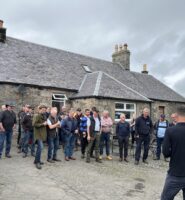 July 2025 Summer Open Meeting Report
Topics: Getting starter with rotational grazing with John Ritchie, Virtual Fencing and the Moredun Research Institute Mobile Laboratory.
download -
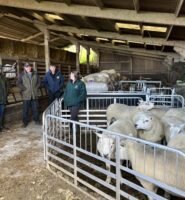 Winter Open Meeting 2024 - Sheep Special
Around 35 members of the farming community met at Shallochpark Farm to look at their systems and discuss the targets and next steps for the Andrew's flocks.
download -
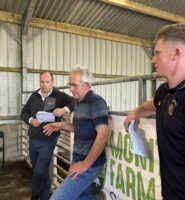 June 2024 Summer Meeting Report
Around 45 members of the farming community attended the meeting. We looked at three key areas: Where we are and where we want to be! John and David Andrew will discuss the current system and production figures from their 150 suckler cows and 550 hill ewes and areas of focus as Monitor Farmers whilst viewing the livestock, including ten recently purchased Luing heifers. Getting the best from your Hill Livestock Management group member David Whiteford of Maxwelston Farm Dailly has drastically changed his farming system over the past few years. Controlling Weeds in Grassland with Soil Essentials and Agrii
download -
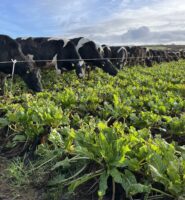 February 2024 Fodder Beet Visit Report
The South Ayrshire Management Group visited Tom Shearlaw to see his dry dairy cows wintering on fodder beet.
download -
 February 2024 Farm Software Report
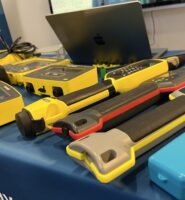
Matt Blyth meet David Andrew via Zoom to support with farm software choice and integration with existing tech on farm.
download -
 Lameness Article
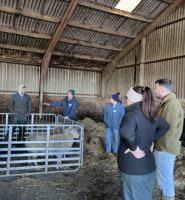
Tackling lameness in a sheep flock can seem a daunting prospect, but weaning is the ideal time to make a good start.
download - February 2024 Winter Meeting Report
Around 55 members of the farming community attended the meeting. We looked at three key areas: Managing sheep lameness Feeding fodder crops in Winter Electronic weighing and recording
download -
 June 2023 Summer Meeting Report
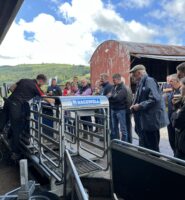
Topics Sheep Handling Systems - Cammy Wilson. Red Clover - Paddy Jack DFL. Grazing Management - Rhidian Jones.
download -
Presentation
-
-
 Why Does it Always Rain on Me
Parasite control and cycles in relation to grass growth on permanent and rotational grazing. The impact of warmer/wetter weather on parasites and diseases and increases in previously. Uncommon species such as barbers pole worm. oThe role of dynamic health planning for your flock/herd including test and treat methods.
download -
 Managing Nutrition in Changing Weather Patterns
What to consider when grazing in dry conditions (like spring 2025). What should the Andrew's consider when rotational grazing cattle/sheep? Silage making - considerations if a very wet or very dry summer. The value of silage analysis - when to sample and how. Importance of seeking professional advice to understand analysis and balance rations.
download
- Argyllshire Monitor Farm - Demonstration and Discussion on the Use of Agricultural Drones
- Argyllshire Monitor Farm - Winter Fodder Crop Varieties with Craig Archibald
- Healthy Lambing at the Banff and Buchan Monitor Farm