THURSDAY 23RD NOVEMBER 2PM AT MEIKLE MALDRON, TORPHINS, AB31 4NR Location
Poppy Frater, SAC Grassland and Sheep Specialist and Duncan Morrison, Deeside Monitor Farmer, will describe the vital role data plays in short and long-term decision-making on his farms. And how FARMAX, the farm planning tool, can help your business too.
The meeting is aimed at:
-farmers and/or their employees who are interested in collecting and using data and information to drive their businesses
-consultants, accountants, livestock and grassland specialists
-people interested in the use of agritech for planning and decision making
-livestock managers interested in pasture-based systems
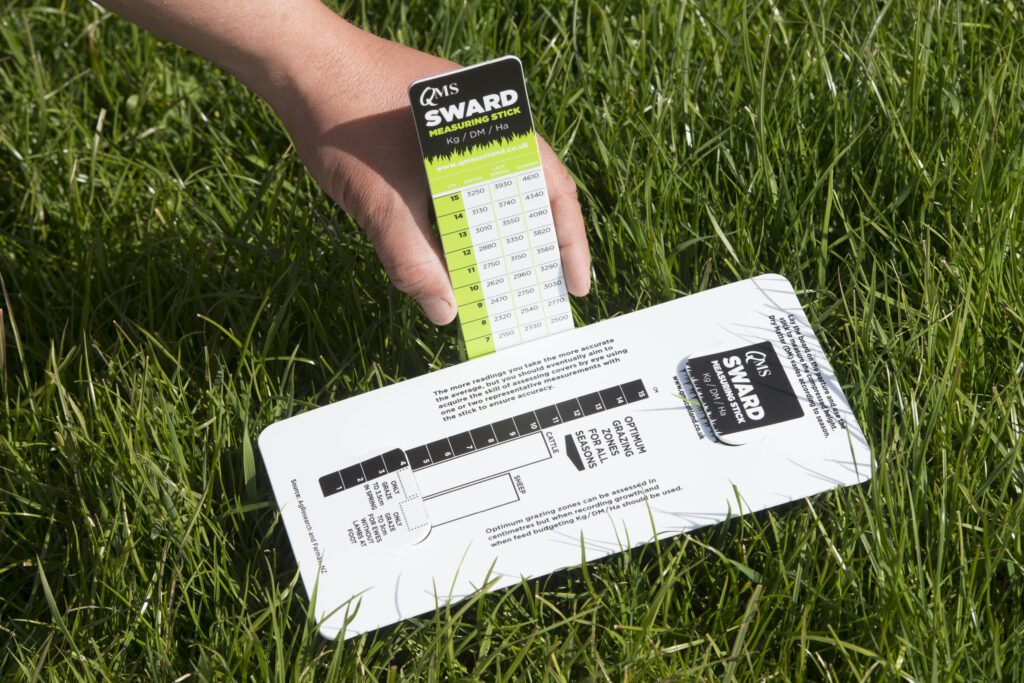
If you’ve got one, bring your Plate Meter or Sward Stick!
Featuring
•Gathering grassland data for forage management
•The benefits of FARMAX – the farm planning tool
•Maximising your profitability while minimising inputs
•Comparing different farm options for your livestock farm
•Creating a confident long-term vision for your business
Event Programme
2.00pm: Arrival at Meikle Maldron, tea, coffee biscuits
2.15pm: Duncan’s new heifer management and Poppy on collecting grassland information
3.00 – 5.00pm at Mid Deeside Church Hall
-An introduction to FARMAX
-The FARMAX commitment, cost and return on investment
-Duncan’s data-driven strategy for Meikle Maldron, Womblehill and Ingliston
-Where data collection can benefit your business planning
-A FARMAX group for the North East
-Questions and answers
Monday, 13th November, 5pm at UA Huntly Mart
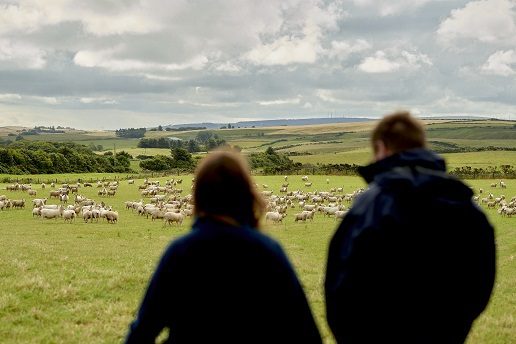
Sheep producers in the North and North-East are invited to a lamb selection and butchery demo as part of the Monitor Farm programme.
The event will focus on selecting healthy lambs for market and a butchery demonstration of value-added cuts in new season lamb, with discussions involving a variety of speakers.
Featuring
– Handling & conformation of lambs for sale with Michael Wilson of Woodhead Bros.
– Batching and presenting lambs for the ring, with Lucy Shand, United Auctions
– Lamb health with Alasdair Prentice and Olivia Busson of Strathbogie Vets
– Butchery techniques of Traditional and Value-added cuts with Gary Raeburn, Forbes Raeburn Butchers
Delicious lamb dishes supplied by Forrest Catering
Cash donations are welcome for the end-of-evening Charity Auction of the lamb cuts for RSABI
Lambs supplied by Bruce Irvine, Banff & Buchan Monitor Farmer
Scanning and Managing OPA (Jaagsiekte) in Your Flock and the Benefits of Blood Testing
Pre-Tupping for Minerals and Other Iceberg Diseases
Fluke, Fanks, No Fence, and Forage Budgets – Farm Walk & Talk at Kinnabus Farm, Islay with Stuart Lamont (Farm Manager) and Dr Philip Skuce (Moredun)
THURSDAY 26 OCTOBER 2023
10am – 3pm
Kinnabus Farm, Isle of Islay, Argyllshire, PA42 7AU
Event Programme
Programme
10.00am Arrival with tea, coffee, and biscuits.
10.30am Farm walk and talk with Stuart Lamont and Dr Phil Skuce
12.30pm Depart Kinnabus Farm
1.00pm Arrive at Ardbeg Distillery nr Port Ellen, PA42 7AE for lunch
1.45pm How to calculate your winter forage budget
2.45pm Close and depart
Join us for a farm walk and talk at Kinnibus Farm, Islay to find out how RSPB Farm Manager Stuart Lamont is taking a proactive approach to targeted control of Fluke. Dr Philip Skuce will share his extensive knowledge on determining fluke risk as well as wider environmental aspects of practical and sustainable liver fluke control.
As a RSBP reserve, conservation grazing is an integral part of the farm to protect species such as choughs and use a small number of Nofence cattle collars to manage the coastal grassland and heath whilst protecting the bird habitats. We will also be able to see the mobile farms mobile fank system.
The farm walk will be followed with lunch at Ardberg Distillery and a practical session on how to calculate your winter forage budget.
BOOKING IS ESSENTIAL
South Ayrshire Monitor
A total of 1770 acres are farmed by John and Allison Andrew in partnership with son David. Rowanston comprises 320 acres of owned land, with an additional 100 acres of neighbouring land rented annually. The 1350 acre hill farm of Blair lies 3 miles away and is rented on an MLDT from Kilkerran Estate. The Andrews have 150 hill suckler cows. Replacements are homebred and all progeny finished on farm. Approximately a further 200 store cattle are bought in for finishing each year. There’s also a flock comprising 550 hill ewes and 450 low ground ewes.
The first meeting date is: 30th November 2022.
Strathspey Monitor Farm
Auchernack Farm is an 800ac livestock farm based in Strathspey. It is run by Malcolm and Sammie Smith who farm alongside son, Calum. They have 140 suckler cows and 120 store cattle and focus on store calf production using predominantly Limousin sires.
The first meeting date is: 5th December 2022.
Banff and Buchan Monitor Farm
Sauchentree Farm, at New Aberdour, on the north-east coast of Scotland, is run by Bruce Irvine in partnership with his father and mother. In total, Bruce farms 650ac with cereals, sheep and cattle with livestock providing fertility for the arable side.
The first meeting date is: 6th December 2022.
Deeside Monitor Farm
Meikle Maldron, in the northeast of Scotland, is run by Duncan and Claire Morrison who moved to the farm in 2016.
In total, Duncan and Claire farm 226 ha as a wholly suckler enterprise with 220 suckler cows comprising commercial Aberdeen Angus and Pedigree Aberdeen Angus and Stabilisers. Of the 220 cows, they own 120 and lease a herd of 100 stabiliser cows.
The first meeting date is: 7th December 2022.
Stirlingshire Monitor Farm
Lands of Drumhead and Blairfad total 1,250ac and are situated on the boundary of the Loch Lomond and the Trossachs National Park. They are farmed by the Duncan family, who have a stratified system with the hill farm at Inveruglas producing replacements for the lowland units. In total, the Duncan’s are calving 180-190 calves each year, and have a flock of 2,300 sheep. Three of Bruce and Shona’s four children are looking to return to the farm from full-time education. Bruce’s parents and father’s cousin also continue to be involved at their respective holdings.
The first meeting date is: 13th December 2022.
Roxburghshire Monitor Farm
Cowbog is a mixed tenanted farm, with two holdings and a contract farming arrangement with the Roxburghe Estates. In total, husband and wife team, Robert and Lucy Wilson, together with Robert’s parents, farm 242ha.They’ve 100 suckler cows plus followers, and 20 finishing cows. All are pure bred Herefords. The Wilson’s also have a small flock of sheep and 160ha in arable or forage production over the 3 farms.
The first meeting date is: 14th December 2022.
Dumfries Monitor Farm
Barnbackle is a 500ac beef and sheep farm run by Richard McCornick, partner Hayley Currie and Richard’s parents, Andrew and Janice. Richard’s brother Craig and wife Michelle are also involved, although farming in Ayrshire but still involved. Barnbackle runs 150 suckler cows, 20 store cattle, 700 ewes. The cows are sim-luings and calve in spring and autumn.
The first meeting date is: 15th December 2022.
East Lothian Monitor Farm
Castleton Farm is a 169ha farm run by Stuart McNicol and his father, Bill, who works on the farm part-time. Stuart’s wife, Jo manages the Agritourism enterprises.
The arable acreage produces wheat, malting spring barley, spring beans, and cover crops
which are grazed by sheep. Stuart only ploughs when necessary, the majority of crops are established with a strip-till.
The first meeting date is: 11th January 2023.
Argyll Monitor Farm, Craig Archibald
Craigens Farm is a 2000ha tenanted unit on the west coast of Islay. Craig Archibald and his family focus on producing Angus and Charolais yearling calves for the store market and fat lambs. In addition to the 220 suckler cows, 200 stores, 1,000 ewes and their lambs, the farm has arable land. 20ha is producing barley grown for a local distillery and 10ha is growing forage rape.
The first meeting date is: 17th January 2023.
DEADLINE FOR APPLICATIONS IS FRIDAY 12TH AUGUST
The aim of the programme is to instigate positive transformational change through innovative sustainable farming practices on nine farms across Scotland. We want to use the learnings and the example set by Monitor farms for the benefit of farmers across Scotland.
The aim of the programme is to help to build resilient, dynamic farms focused on reaching full economic, social, and environmental sustainability, by optimising production.
How each of the nine farms chooses to optimise their business and improve their profitability will be as unique as the businesses themselves
The programme will be grounded in expert advice and will embrace innovative practices to support farms on their journey. There is a substantial commitment required of a Monitor Farmer for a period of around four years.
The farmer will receive a significant amount of help over this time from the delivery team including a dedicated Regional Adviser, and Programme Manager, as well as access to specialist input throughout the programme.
The programme is led by QMS and AHDB, for more information contact MonitorFarm@QMScotland.co.u
PLEASE SEE INFORMATION SHEET AND APPLICATION FORMS BELOW
More Information and Application Forms
Six host farmers have agreed to take part in the Monitor Farm Legacy initiative which runs until July 2021. Their farm projects – the earliest of which dates from 2003 – will be revisited to update the farming industry on their progress.
Funded by the Scottish Government, and jointly managed by Quality Meat Scotland (QMS) and the Agriculture and Horticulture Development Board (AHDB), the initiative will deliver a series of virtual events featuring each of the six Monitor Farms. These will give the host farmer and their local community group an opportunity to review and reflect on the positive business changes and on-going projects that have lasted beyond their previous involvement with the Monitor Farm Programme.
A series of case studies about each farm will reflect on the themes that were most relevant to their business including: herd and flock productivity, environmental management, diversification, and succession. Virtual events including a farm tour, field ‘walk & talk’, webinars, Facebook live events and podcasts will be used to let everyone know about the work being done at each farm. Carbon audits and an Integrated Land Management Plan are also part of the programme.
Hugh Broad from Woodhead, Gifford in East Lothian commented: “We became a Monitor Farm in 2007 and were one of the first arable farms to participate in the programme. I am a great believer in the value of evidence led learning and peer review as it helps inform decision making.
“Constructive criticism is a benefit for our business and there is always more to be learnt so the opportunity to revisit the Monitor Farm programme and look at what else we can improve on is one we couldn’t turn down. We are looking forward to sharing what we learn this time round with the wider farming community.”
Strategic, operational and management groups will be established to review and develop the key aims and objectives of the programme, from setting out KPIs to conducting a six-monthly review of the legacy programme.
Beef and sheep farmer Robbie Newlands from Cluny Farm near Forres highlights: “Our original management group continued to meet after the Monitor Farm Programme ended eight years ago. There is a dozen of us and it is all very informal and has become more of a social group. We meet up when we can and visit each other’s farms to look around to see what each of us is doing and offer advice and constructive criticism. Joining the legacy programme will hopefully encourage more local farmers to get involved and benefit from access to the group.”
Chris Leslie, Knowledge Exchange Manager, AHDB said: ”The monitor farm programme has allowed Scottish farmers to benefit from its ‘farmer led and farmer driven’ focus and we are delighted to be able to work with some of our previous monitor farmers again. The opportunity to revisit what has been done previously and look forward to what more can be done will offer a fresh approach for each farming enterprise.”
Bruce McConachie, Head of Industry Development at QMS said: “With the launch of the new legacy farms across Scotland there is an opportunity to build on the success achieved to date and for the industry to play a role in the transformational change of farm and rural business in Scotland which will help meet the challenges ahead.”
A new Monitor Farm Hub will be developed as part of the programme. It will provide an online platform and act as a valuable tool for knowledge transfer to support farmers in Scotland.
The former monitor farms selected to be part of the legacy initiative, funded by the Scottish Government, include:
- Robbie Newlands, Cluny Farm
- Andrew Baillie, Carstairs Mains Farm (Carstairs)
- Iain MacKay, Torloisk Farm (Mull)
- Kenny Adams, Torhousekie Farm, (Wigtown)
- Andrew Booth, Savock Farm (Ellon)
- Hugh Broad, Woodhead (East Lothian)

Improved community spirit, better business performance and an openness to change are just some of the benefits experienced by farming groups and businesses involved in the 2016–2019 Monitor Farm Scotland programme, according to a new report launched by Quality Meat Scotland (QMS) and Agriculture and Horticulture Development Board (AHDB).
Funded by Scottish Government, the aim of the Monitor Farm Project is to help improve the productivity, profitability and sustainability of Scottish farm businesses. Nine monitor farms were established across Scotland in Nithsdale, Lochaber, Sutherland, the Borders, North Ayrshire, Shetland, Morayshire, the Lothians and Angus.
The Monitor Farm Impact Report includes the changes and improvements each of the nine monitor farms have made over the three-year programme.
The report also showcases the results of a survey conducted with those who were part of the project. The survey highlighted that 93% of those who attended a Monitor Farm meeting felt this was a good use of their time. The results also show that 70% of attendees say the Monitor Farm programme allowed them to form new networks and build relationships with their farming community.
With farming often an isolating and lonely profession, one of the most profound effects of the initiative has been in bringing farming communities together. Meeting regularly and sharing ideas and offering feedback has helped forge new friendships, build confidence and encourage knowledge sharing.
Bruce McConachie, Head of Industry Development with QMS said: “Every one of the nine Monitor Farms has embraced the support of the Monitor Farm network wholeheartedly. The Monitor Farm Impact Report highlights the numerous improvements host farmers have made to their businesses, which, in turn, has made them more resilient and profitable.”
“The results also show that at the heart of the initiative is the support of the whole farming industry. Through regular farm meetings with industry experts and a passionate group of local farmers, knowledge and experiences have been shared.”
Paul Flanagan, Scotland Director for AHDB added: “Gathering data and basing decisions on numbers and evidence has been at the forefront of this initiative. This has highlighted areas that could be improved within individual farm businesses and focused attention on those areas which were underperforming. For some, this has resulted in a complete change in business direction. However, for most of the monitor farmers, making improvements to overall business efficiencies has been about adopting numerous small changes that add up to a big difference.”
The Monitor Farm Impact Report publication can be viewed and downloaded here.

Links:
QMS Maximising the Potential of Fodder Beet for Livestock Poster
Maximising the Potential of Fodder Beet for Livestock Report
Growing Where to Start Guide- 7 Step Guide and 10 Helpful Tips
A new report which includes a step-by-step approach to growing fodder beet, has been launched by Quality Meat Scotland (QMS), AHDB and SAC Consulting as part of the Monitor Farm Scotland programme.
The report, Maximising the Potential of Fodder Beet for Livestock, includes a seven-step guide to growing fodder beet, ten helpful tips and a range of technical information and up-to-date data to assist farmers on how to successfully grow fodder beet in Scotland.
Data included in the report was harvested from a project including four monitor farms and members of their community groups from Shetland, Sutherland, Angus and the Lothians. All the farms participated in a trial growing fodder beet and the results were analysed. The project was facilitated by Kirsten Williams from SAC Consulting, part of Scotland’s Rural College (SRUC).
Ms Williams commented: “This restricted pool of information and lack of basic knowledge specific to fodder beet crops grown in Scotland was a challenge for Scottish livestock farmers who are growing the crop.
“Interest in the crop stems from the fact that fodder beet has the potential to provide many benefits to livestock producers in Scotland, the main one being the yield potential, which is larger than any other forage crop grown in the UK.”
Bruce McConachie, Head of Industry Development with QMS added: “The high yield has potential to make fodder beet one of the cheapest forages per kg of dry matter, as well as one of the cheapest forage per mega joule of energy due to its nutritional characteristics. This helpful guide will provide farmers with the steps needed to grow Fodder Beet which will aid their businesses and positively impact their bottom line.”